Amazon Rainforest Tours and Travel | Animals of the Amazon Rainforest
It goes without saying that what makes Amazon tours so exotic is the wildlife we hope to glimpse, conjured up from the picture books of our childhood. Whether you visit the Peru Amazon, Ecuador Amazon, Bolivia Amazon, Brazil Amazon or elsewhere in the rainforest, a trip here is an indelible experience. Besides the wildlife that inhabits the river itself, the Amazon rainforest is home to over a third of the Earth's species including some 300 mammals, over 100 species of reptiles and hundreds of amphibian and hundreds of bird species. Then there are the insects, some beautiful, some bothersome, more species and more numerous than you will find anywhere else in the world, including 7,000 species of butterflies, some as large as your hand.
Return to Previous Page
-
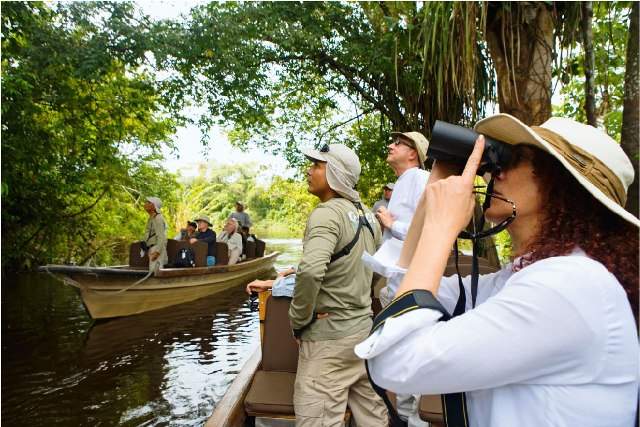
Staying near the river where many species come to feed makes Amazon tours exciting adventures for photographers and wildlife enthusiasts alike. While sparse in the open river areas, wildlife are prolific along the river banks and stream edges in the narrower tributaries where they come to feed. Along the shoreline one may see capybaras grazing. The world's largest rodent, these creatures are similar in appearance to their relative, the guinea pig, growing to a length of four feet and weighing over 100 pounds. Three of the four species of peccary, resembling a pig, roam the Amazon rainforest, the collared species that travels in herds of fifty, the rarer variety, the white-lipped peccary and the recently discovered giant peccary.
-
Other species are more difficult to spot, including those that feed at night, with the lush jungle foliage as cover. Among these is the jungle's largest cat, the highly endangered jaguar, a fearsome predator that hunts from the trees as well as the forest floor. Weighing up to 370 pounds, the jaguar's spots keep it well-camouflaged as it hunts for monkeys, capybaras and other mammals. The animal is easier to hear than to see, its booming roar an exciting and chilling experience on Amazon tours.
-
The odd-looking plant-eating tapir weighs from 300 to 600 pounds and spends most of its waking hours eating. Hunted for its meat, the tapir is highly endangered. Species of the threatened puma also live in the forest, hunting from the river and its shoreline. Both two-toed and three-toed sloth species inhabit the rainforest, sleeping through the day and feeding at night, staying safe by moving so slowly that they are mistaken for the tree branch to which they cling. The galagos (bush baby), hunts insects and small animals at night in groups of twenty. Of perhaps less interest, but nonetheless fascinating, are the thousands of night-feeding bat species, including the vampire bat whose saliva prevents the blood of its prey from clotting.
-
The Amazon is home to more monkeys species than any other place in the world. All are tailed varieties, some living exclusively in trees while others spend little time there. Among the more common monkey varieties are the tamarind and squirrel monkey.
-
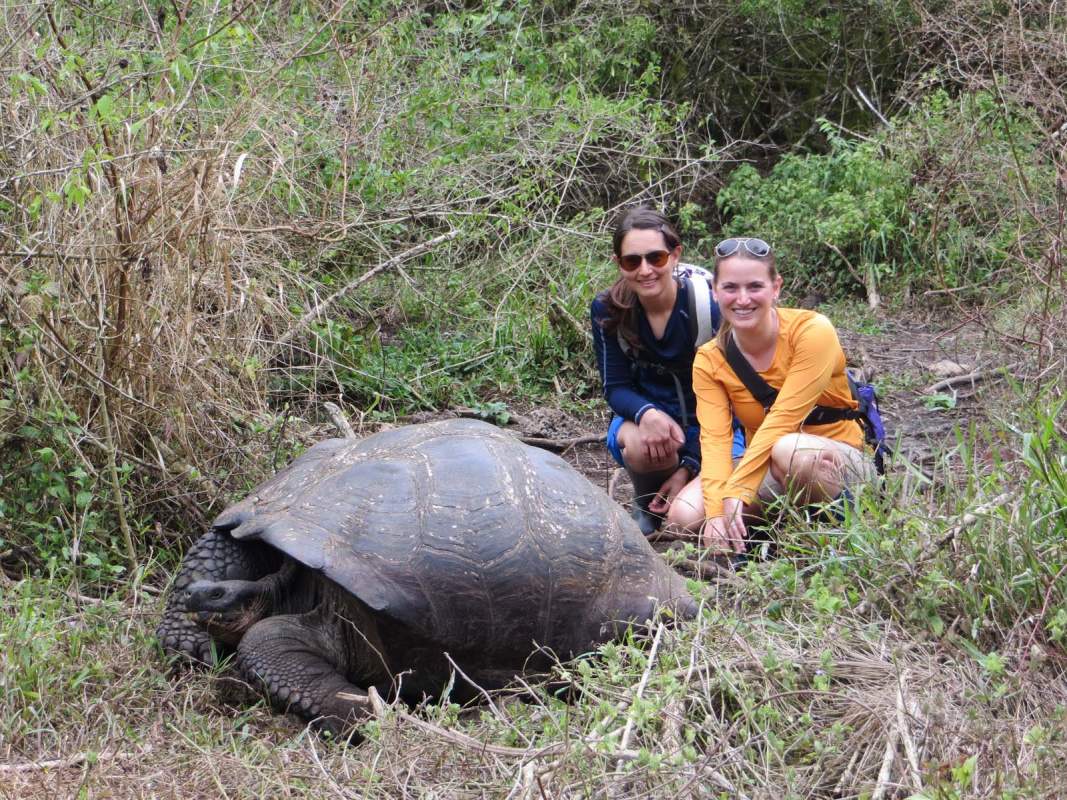
Among the Amazon's four hundred identified species of frogs and toads is the giant-horned frog, found nowhere else. Colorful species of frogs including the fearless poison dart frog are very visible. Tortoise species including the largest South America, the yellow-footed tortoise, are found in the rainforest and live mostly on land unlike the Amazon-dwelling turtles that make their home in the water.
-
Some of the world's most dazzling butterflies inhabit the rainforest, including the huge brilliant blue morpho rhetenor, the multi-colored striped uranus sloanus and the thecla coronata. Read about the birds and river wildlife species one is likely to encounter on Amazon tours in our articles devoted to these subjects.