The Llama
Domesticated llama and alpaca species are raised commercially
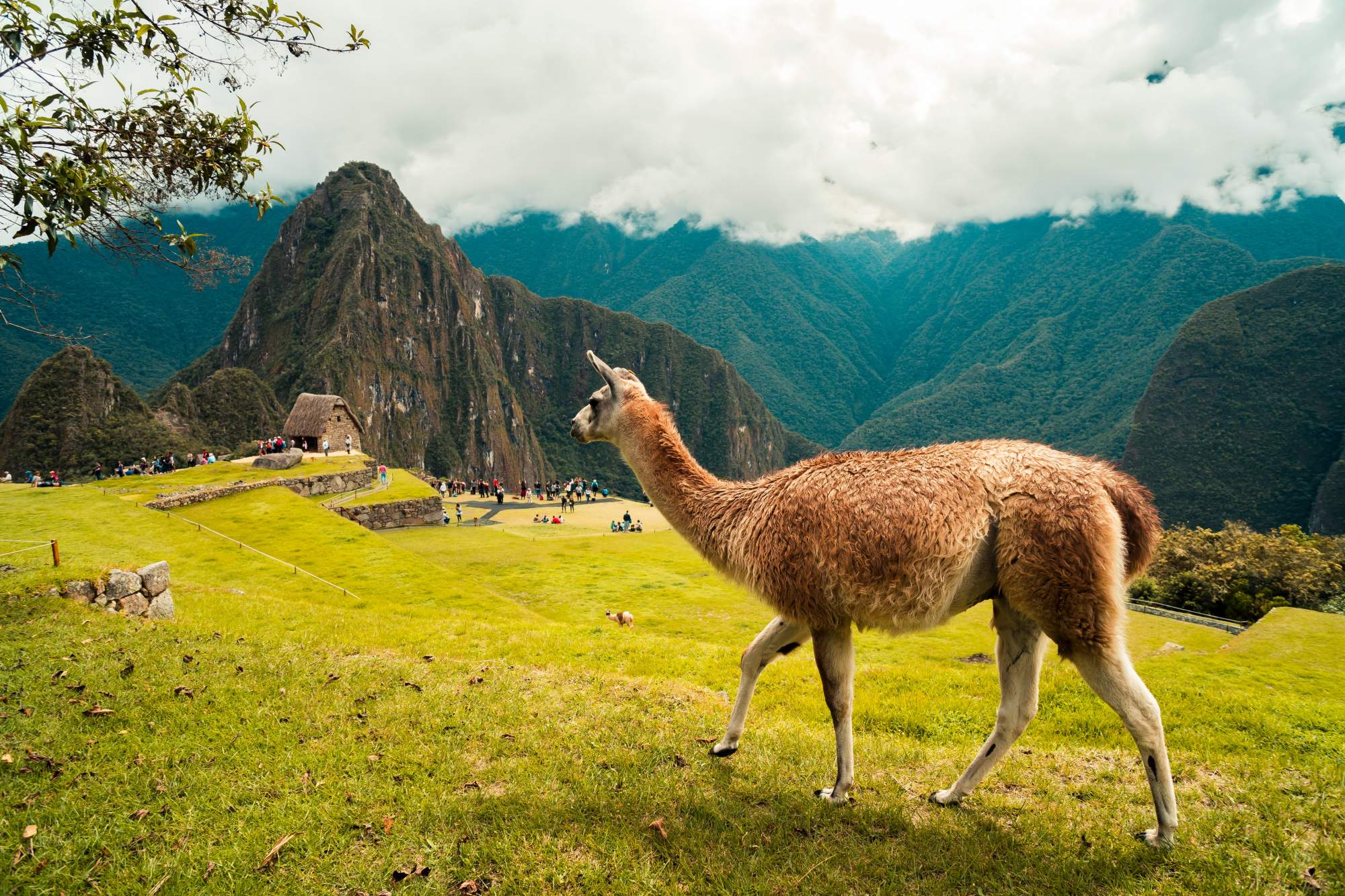
The llama, pronounced YAH-mah, is the largest of the camelid species that inhabit South America. Weighing between 250 and 450 pounds, the adult llama reaches four feet at the shoulder and five and a half to six feet at the tip of its distinctive ears. Through millennia, the llama has been bred in captivity for its fleece as well as serving as a pack animal, perfectly designed for Andean terrain. That llamas have pads on the bottom of their feet instead of hooves makes them environmentally-friendly travelers. Their brain power, sweet nature, sure-footedness and the ability to carry heavy loads in relation to their own weight, make llamas popular pack animals on Peru tours and elsewhere. They also make excellent guard animals, trained, either as individuals or in groups to warn of approaching predators and then charge them. The llama is the only one of the four South American camelid species used as a pack animal.
Return to previous page
Llamas
-
Llamas prefer high grassland habitats at elevations from 7,000 to 13,000 feet where visitors on Peru tours and other destinations will see them in herds. Domesticated llamas are less social than if they inhabited the wild and have adapted to the status of novelty farm animal and family pet far from their traditional roots in the harsh, cold highlands. The llama reaches maturity at about three years of age. Offspring are born surrounded by a protective group of females after a gestation of a bit less than a year. Some 2.5 million llamas inhabit the Andes, making them a common sight on South America tours, especially in Bolivia. The llama is not endangered.
-
Llamas may be various shades of white, black, brown, gray, red or a multi-colored hue. The animal’s fleece is far coarser than that of the alpaca or vicuna and therefore less expensive, yet suitable for a wider range of uses. The animal’s coarser outer-layer of fleece is made into durable woven products, from rugs to ropes, and the softer under-layer is made into clothing, usually outerwear garments such as scarves, hats, jackets and sweaters that make popular souvenirs of travel to Peru. Llama fleece may be obtained by brushing, shearing or clipping.
-
Two varieties of llamas exist, the kara and the chacos. The kara llama has the characteristic double coat of the llama but the chacos (or wooly) llama has only one coat from which a mixture of fibers is derived. Most llamas that visitors will see during their Peru tours and other Andean locations are the kara variety. Bred for its fleece, the huarizo is a hybrid species of a llama and an alpaca.
-
Low fat and mild tasting, llama meat is traditionally prepared by drying and salting it, called charque. The animal’s excrement is used as fertilizer and when dried, burned as fire fuel.