The Political History of South American Camelids
Domesticated llama and alpaca species are raised commercially
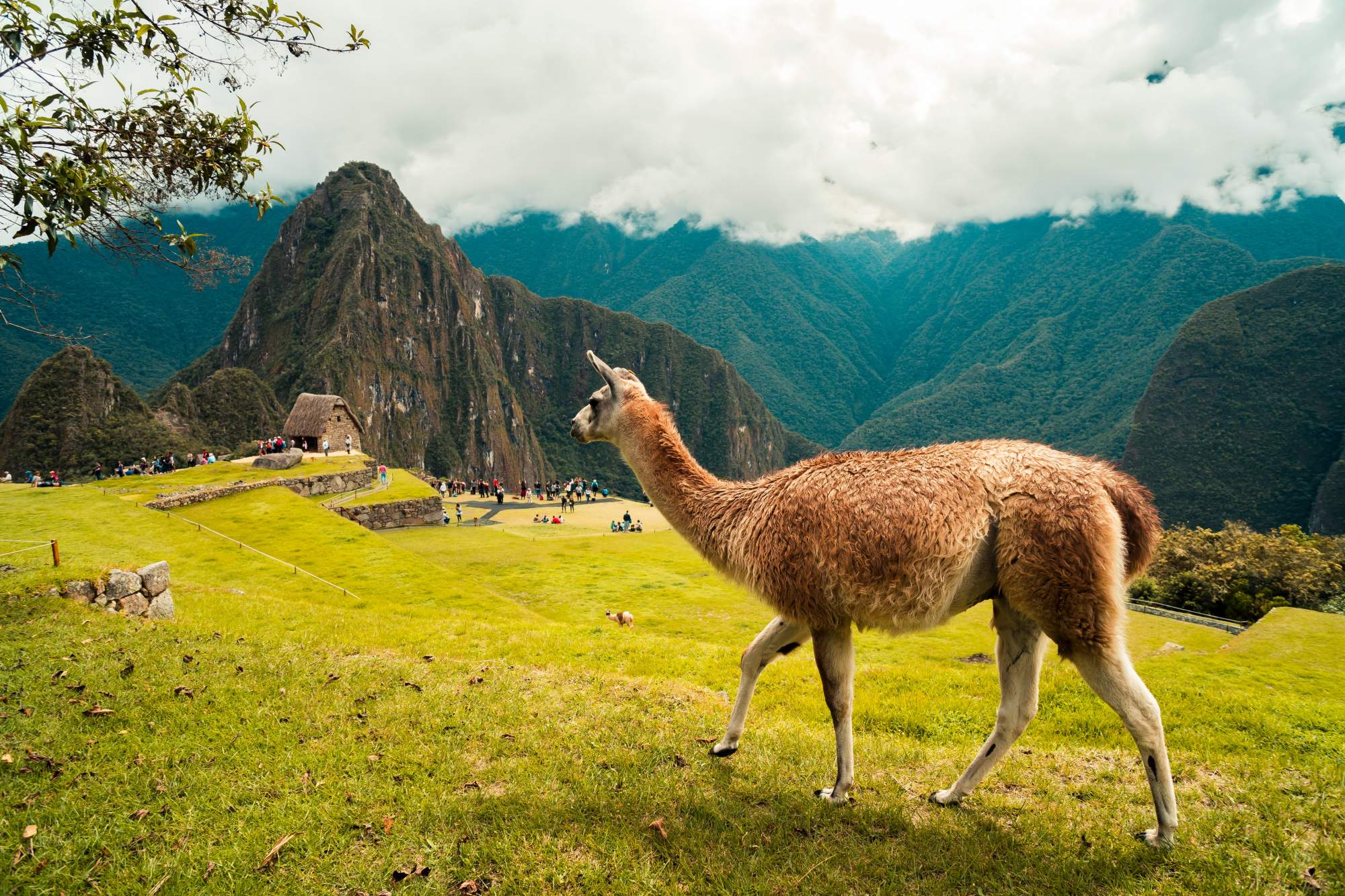
For thousands of years, indigenous populations have been making use of South America’s four camelids, the domesticated alpaca and llama and the wild vicuna and guanaco. All four species have played an important role in the continent’s economic and political history. When the Incas ruled, Inca Trail trips through the empire were arduous without the benefit of the wheel. These Peru tours required a multitude of messengers to travel to Machu Picchu. Satchels woven of camelid fleece were invaluable in the transporting of goods as were the llamas that carried them. Camelid dung made fields more productive. During colonial times, llamas brought heavy ore from the metals mines in the highlands down to the coast for export.
Return to previous page
South American Camelids
-
So revered was the vicuna during Incan times that only royalty were allowed to wear garments made of the animal’s fleece. The penalty for anyone else doing so was death. Vicunas were protected, sheared, accounted for and then released back into the wild. When the Incas recognized that escape was their only means of surviving the advancing conquistadors, they fled but not before burning what was most valuable to them—their royal storehouses of camelid fleece.
-
With the takeover of the Andean civilizations by the Spanish, the slaughter of these culturally and economically important animals began, resulting in almost all of the vicunas and guanacos being wiped out. The alpaca herds were squeezed out of pasture lands and condemned by the inaccurate belief that the species carried syphilis. A large percentage of the alpacas throughout South America were killed. Some animals were able to survive because they were hidden away by their indigenous protectors.
-
The alpaca and vicuna populations were threatened again in the 1980s and 1990s when the Maoist rebel group, Shining Path (Sindero Luminoso), sought to topple the Peruvian government. It was in the Andean regions of Peru where this guerilla group first sought a foothold, putting Peru’s camelids at the center of the conflict, decimating established conservation programs and upsetting the alpaca industry.
-
In 2002, President George Bush signed the Andean Trade Promotion and Drug Eradication Act, intended to help stem the flow of illegal drugs into the United States by providing an incentive to engage in legal industries. The law eliminated tariffs on the importation of certain products, camelid fleece among them, from Colombia, Ecuador, Peru and Bolivia in return for the governments of these countries participating in efforts to eliminate the drug trade. Congress has renewed the act several times since then. In 2009, Bolivia was dropped for not keeping up its end of the bargain. The law’s impact on drug-trafficking is considered modest, but for those in the fleece business, it has been a welcome boost to the profit margin of one of the few industries available to these high-elevation Andean communities. The law will expire at the end of 2010 unless Congress votes to extend it.
-
On a different battle field, the war goes on, as the loss of vicunas to poaching continues. Following multiple incidents of poaching in Peru’s Ayacucho region, twelve communities have joined concerned organizations in an effort called Vicuna Peru to increase the security of the buffer zone around the Pampa Galeras-Barbara D’Achille National Reserve. To defeat the vicuna killers, some are suggesting that the Peruvian government arm the villagers as they did in the 1990s to defeat the Sendero Luminoso.
-
Southern Explorations offers many Peru tours that explore the Andes where South America’s camelid species are found. If you are interested in travel to Machu Picchu or another Andean destination for a Peru adventure vacation, please review our trip descriptions or give us a call.