Keeping Cacao Sustainable in Ecuador
Native species of cacao trees are shade-grown in bio-diverse areas of Ecuador, giving the country’s cacao industry an important role to play in providing wildlife habitat and preventing the destruction of the Amazon Rainforest. Some of the cacao of the Ecuador Amazon grows wild under a canopy of old forests where biodiversity is particularly high. On the opposite side of the country are the small farms that grow most of the endemic Arriba beans on which Ecuador has built its international reputation for high quality cacao. For the poverty-stricken cacao farmers trying to eke out a living from the commodity, the temptation is great to substitute more disease-resistant, higher-yield hybrid species that can be grown plantation-style in the sun with the help of fertilizer, irrigation and pesticides. Most chocolate bar buyers are not knowledgeable enough to distinguish between an authentic Arriba chocolate bar and hybrids. When they see the words “Ecuador chocolate” and that the bar contains a high cocoa percentage, they presume they are getting the best of the country’s chocolate, a bar made from cacao that is grown with sustainable methods which may or may not be the case.
Return to previous page
Keeping Cacao Sustainable in Ecuador
-
Concern is growing that the desire for more predictable and profitable yields will result in the destruction of habitat and the degradation of the quality of Ecuador’s cacao in the long run. To address the problem, environmental organizations are working with government and industry to promote sustainable practices that will provide farmers the incentive to continue growing shade-grown native varieties instead of turning to hybrids.
-
The World Cocoa Foundation, a member-based organization comprised of the world’s major chocolate producers, partners with governments to promote sustainability. Some of the major chocolate companies such as Cadbury undertake their own efforts to help the cacao-producing countries improve the lives of cacao growers and implement benign cacao disease-control programs. Scientists are experimenting with the concept of establishing cacao plantations as buffer zones around forests, for the mutual benefit of the plantation and the habitat. The cacao sustainability movement has opened up new eco-tourism destinations to show visitors on Ecuador tours how cacao is grown and processed.
-
To prevent the destruction of the Amazon Rainforest, environmental organizations help the farmers to make cacao harvesting more profitable. The Rainforest Alliance and the Quito-based environmental organization, Conservacion y Desarrallo (CyD), have brought the farmers the necessary expertise to help implement sustainable practices that also increase their yield. It has organized the farmers into cooperatives so that they can sell their beans collectively without middlemen and share the costs of processing facilities.
-
Without the means to purchase mechanical dryers, many farmers are forced to sell their beans before drying them at a lower price than farmers who sell them dried. CyD supported the development of an inexpensive solar-powered dryer to enable the farmers to dry beans even in inclement weather conditions. As a result of this and other modifications in agricultural practices, yield and prices have increased. The organization has replicated its programs throughout Ecuador’s cacao growing regions.
-
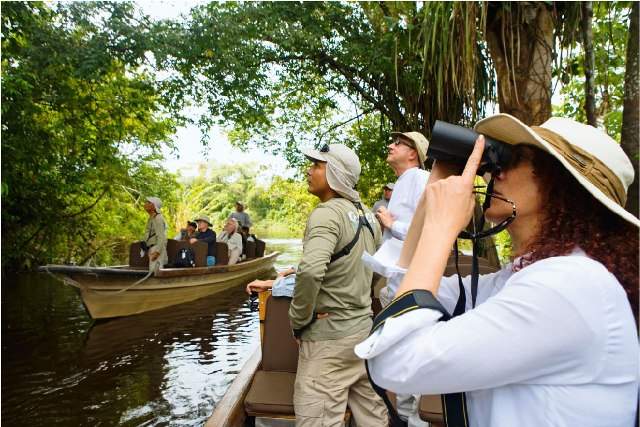
Visitors who travel to Ecuador with Southern Explorations may choose from among several different Ecuador tours to the Amazon. Three of these Ecuador tours visit the environs of Yasuni National Park where cacao grows, the four to five-day Napo Wildlife Center or La Selva Jungle Lodge trip and the eight-day Amazon Kayaking Adventure.