
SELECT REGION
SOUTH AMERICA TOURS
CENTRAL AMERICA TOURS
TRIPS BY ACTIVITY
© 2005-2010
World Wide Explorations, Inc.
Website design and programming
TerraRhythm
Media for Vibrant Change
Antarctic Travel Seasons - Southern Explorations
Antarctica’s tourist season is short, just five months, from the beginning of November through the end of March. The rest of the year, ice makes the waters around Antarctica impenetrable, as temperatures plummet to -50°F, and the continent becomes dark, day and night. Come spring, Antarctica is reborn, with the exuberant activity of shoreline colonies of birds and mammals preparing to breed and nest in the region, and later in the season, to begin their busy life as new parents.
Choose Antarctica Cruises by Itinerary | Choose Antarctica Cruises by Class of Vessel
A Humpback Whale, in its antarctic summer feeding ground, surfaces to the delight of antarctica's human visitors
As the Antarctic year progresses from spring to autumn, the Antarctic Peninsula and nearby islands of the Southern Ocean change in appearance and character, offering a different range of spectacular sights and possibilities for visitors on vacation in Antarctica. Travelers who have some flexibility in scheduling their Antarctica travel may wish to plan their visit during the period that best matches their particular interests. Here are some trip aspects to consider when traveling to Antarctica.
WHEN TO TRAVEL TO ANTARCTICA
-
November - December (spring – early summer)
Wintering scientists at Antarctica’s research stations welcome the first Antarctica visitors of the season in November and December. Spring arrives in the more northerly latitudes first, in the Falkland Islands and South Georgia by November and in the South Shetland Islands by December, then spreading down through the Antarctic Peninsula.
December starts the high Antarctica tourist season, with its warming temperatures and longer daylight that stretches to twenty hours a day, especially appreciated by photographers who can keep shooting until past midnight. When the winter darkness lifts, the spring and early summer sun over Antarctica causes an explosive growth of phytoplankton in areas of upwelling. This provides food to the multitude of zooplankton swarms, including krill, the base of the food chain for squid, fish and ultimately seabirds, seals and whales that flock here to fatten themselves and produce their young. Here are some of the sights that visitors can expect on their Antarctica vacation during early summer:
-
Crabeater seals are born between mid-September and early November. The species’ name is a misnomer since it does not eat crab. The Crabeater is the world’s most common seal, a fast swimmer that lives on and around pack-ice within the Antarctic Convergence.
-
Southern Elephant seals can be seen guarding their harems aggressively until early December after their females have given birth on sub-Antarctic beaches in October. Living off a diet of squid supplemented by finfish, the species is the largest of the seals. Southern Elephant males grow to over fourteen feet, and the species derives its name from the male’s trunk-like proboscis that it sounds to ward off competitors.
-
The first whales arrive in Antarctic waters to feed, including the Humpback, Minke and Southern Right whale. Antarctica is the summer feeding ground of the Humpback, a species that grows to almost fifty feet in length and can be recognized by its distinctive calls and its long, scalloped flippers. Humpback whales travel in groups and are usually found in krill-rich coastal waters. The Minke whale, diminutive compared to other whale species, is found in abundance throughout Antarctica, usually on the edge of the pack-ice. The slow-moving Southern Right whale feeds near the surface, having made the species an easy target for hunters over the centuries, bringing it to the verge of extinction before protections could be put in place in 1935. The species grows to fifty-eight feet and is most likely to be seen off the South Shetland Islands and South Georgia on the way to winter breeding grounds. Southern Right whales observed from shore is an unforgettable sight on Antarctica expeditions.
-
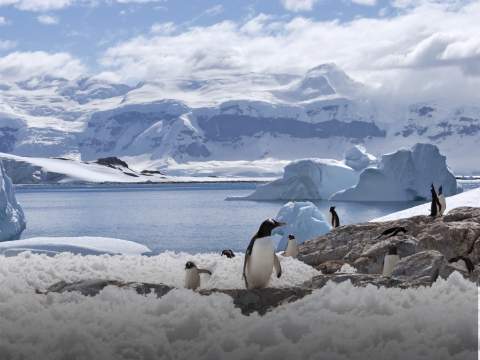
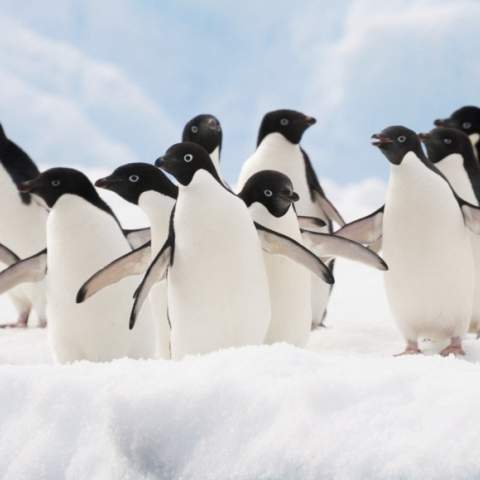
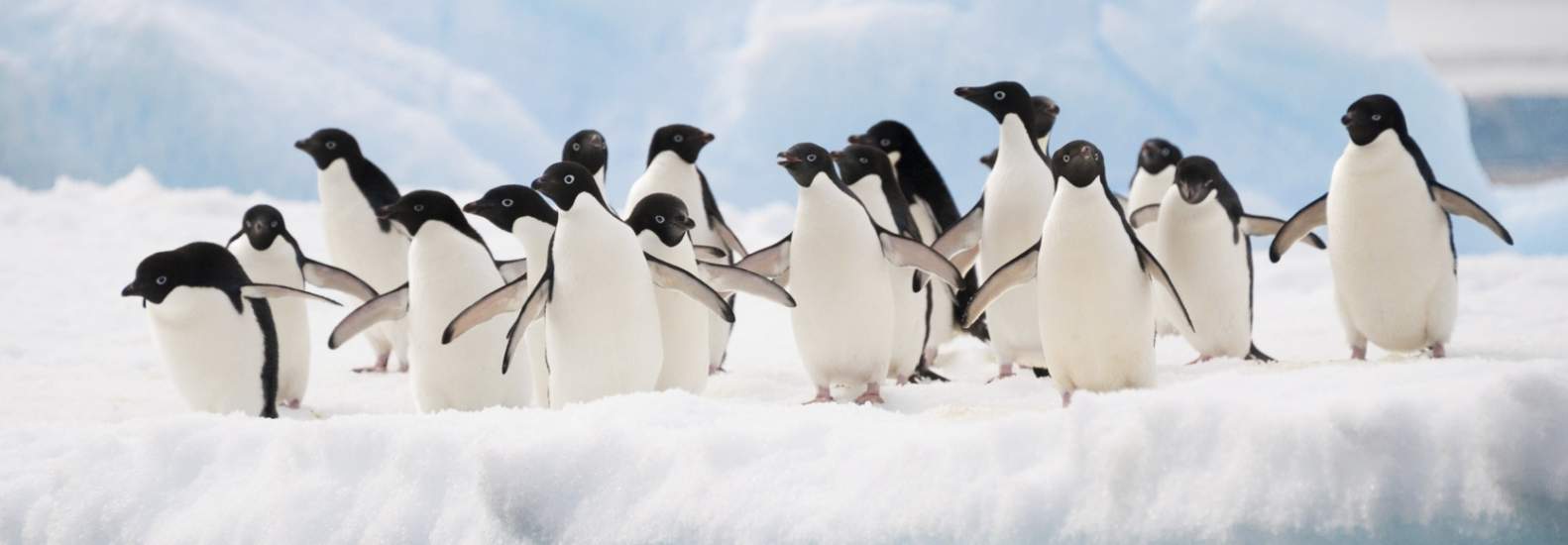
Penguins are always fascinating to watch. This time of year, passengers on Antarctica cruises may observe their complex courtship rituals, including nest building, sky pointing and stone stealing. Penguin eggs are laid in November and December (likewise, Petrals and Cormorants), and Penguin chicks start to hatch at the end of December in the South Shetland Islands. Other seabirds are also in rare form during this busy time of year. South Georgia is home to several bird species with a cycle longer than one year, among them the King Penguin, so eggs and then the young can be found in these colonies from November to March.
-
And finally, last winter’s sea-ice offers sometimes spectacular cruising among the floes where seals may be seen lounging most anywhere to the delight of all passengers during their Antarctica tours.
-
January – February (summer)
Warm weather continues in January when daytime temperatures on the Antarctic Peninsula can reach 60°F though most coastal temperatures remain around freezing. The receding ice opens more distant destinations along the Antarctic Peninsula to ship and shore Antarctica exploration. Wildlife activities get into full swing, offering travelers on Antarctica cruises a wide array of animal behavior to witness.
-
Most penguin chicks hatch in January, starting in the South Shetland Islands and later on the Antarctic Peninsula. The flurry of colony activity continues unabated in February as the young become bolder and start clumping in crèches to protect themselves from predators. Here, parents seek out their young at feeding time to provide fresh-caught krill.
-
Born earlier in the season, fur seal and leopard seal pups are visible, and the concentration of fur seals increases. Swift on shore or in the sea, Antarctic fur seals can grow to more than six feet and live in colonies. They spend summers around islands within the Atlantic Convergence, feeding on krill, squid and finfish. Speedier still is the Leopard seal, so named for its spotted coat. Growing to eleven feet, it subsists on a diet mainly of krill and fish but also penguins and occasionally, smaller seal species.
-
Whale watching in Antarctica is at its best in February. Whales are especially plentiful around Shag Rocks and South Georgia Island where different species may be seen in large numbers, to the awe of all Antarctica cruise passengers.
-
March (autumn)
Nightly darkness returns as the sun sinks farther below the southern horizon, but temperatures are still above zero, and the end of the Antarctic tourist season brings its own unique pleasures.
-
Cruise ship passengers get to experience a touch of Antarctic winter with night frosts that create unique patterns of thin sea ice on the surface come morning.
-
Adult penguins molt on shore, and the young begin their independent life at sea.
-
The receding ice allows cruise ships to extend their Antarctica tours still further along the Peninsula. With the snow cover at its minimum, Antarctic travelers may take easy and extensive walks in the South Shetland Islands.
-
Species of snow algae bloom, turning snow slopes and ice cliffs in certain Antarctica locations to exotic colors of pink and green.
-
Whale watching continues to be thrilling in March.
-
There is no better place to witness the changing hues of Aurora Australis, the Southern Polar Lights, than in the skies above Antarctica. This southern celestial show occurs between March and September, most commonly at the peak of the sun spot cycle and subsequent two years.
ARTICLES & INFORMATION ABOUT ANTARCTICA
CRUISES AND TOURS