Amazon Rainforest Tours and Travel | The Challenge of Sustainable Economic Development in the Amazon
There is no disagreement about the benefits of sustainable economic development in the Amazon but much to argue about when it comes to designing policies to foster such activities. It appears "sustainability" is in the eye of the beholder.
Return to Previous Page
-
The Amazon governments have a history of working with conservation organizations to develop sustainability policies. One of the largest such projects, The Amazon Region Protected Areas Program, was spearheaded by the government of Brazil. Under an international agreement signed in 2002, the program seeks to build a $240 million endowment to provide on-going funding for 190,000 square miles of the Brazil Amazon Rainforest.
-
To implement the plan, the agreement has brought together the resources of many entities including the World Wildlife Fund, the World Bank, the Global Environment Facility, the Brazilian Biodiversity Fund and the German Development Bank. Since the program got underway in 2003, 12% of the projected area has come under the agreement's protection. While such a comprehensive conservation program might seem the logical way to protect so vast an area, the plan has not been without its critics. Among the detractors are those who would prefer to develop areas of the Amazon for the benefit of the peoples living there, generate much needed funds to operate the countries' governments, and allow private enterprise access to the bountiful region. They see the plan as unnecessarily restrictive, conceived and imposed from afar.
-
Making scary headlines in the Amazon these days is the Initiative for Integration of the Regional Infrastructure of South America (IIRISA), an effort on the part of South American countries to eliminate poverty by making infrastructure improvements that will make expanded economic development possible. With twelve South American countries participating, this push promises to turn disjointed development projects of the past into region-wide coordinated efforts with huge positive and negative impacts. Of IIRSA's many projects, fifty-four are located in the Amazon. Most are related to the river itself, improving navigability, building ports and harnessing the power of the river to produce energy.
-
Environmental watchdog organizations are wary of the ambitious goals set out by IIRSA. One such organization, Conservation International, has conducted an analysis of IIRSA's Amazon plans, offering its own recommendations. In its report entitled "A Perfect Storm in the Amazon Wilderness: Development and Conservation in the Context of the Initiative for Integration of the Regional Infrastructure of South America (IIRISA)," Conservation International aims to expand the dialogue. Its recommendations include planting new crops where others have failed rather than destroying more rainforest to expand agriculture and farming fish instead of upsetting the ecological balance of the river by increasing commercial fishing operations.
-
In its efforts to influence the IIRSA process, the environmental organizations have undertaken a project to keep concerned citizens and organizations abreast of IIRSA's progress a project called Building Informed Civic Engagement for Advocacy and Conservation of the Andean Amazon (BICECA). Its website is (www.biceca.org).
-
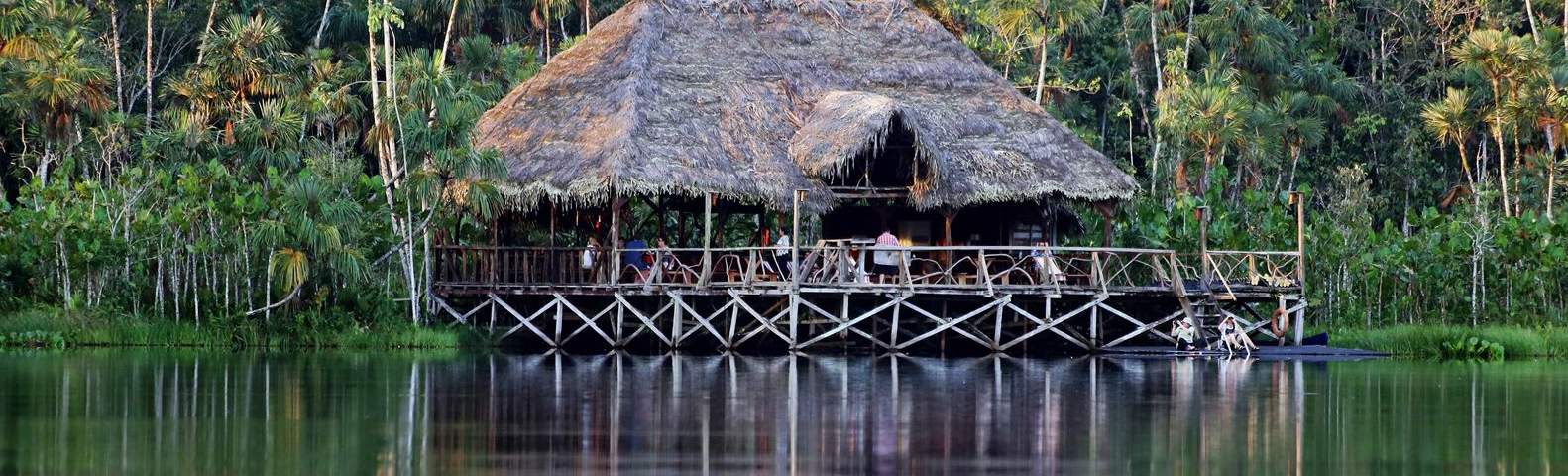
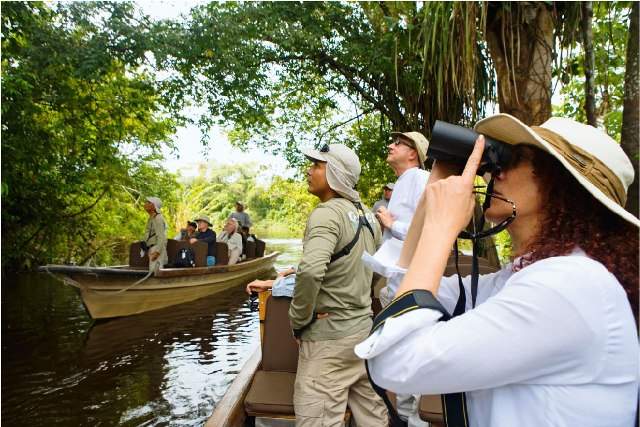
On the micro-end of the economic development spectrum, more indigenous tribes are turning to eco-tourism. With outside help, they are establishing private reserves as settings for their eco-lodges and learning how to cater to this lucrative market of high-spending travelers who share the sustainability ethos. Most of the Amazon tours that Southern Explorations arranges use such facilities.
-
Outside entities are also helping tribes to develop other cottage industries and markets as a way to retain their traditional way of life. The Wildlife Conservation Society helps Amazon communities with start-up ventures such as its sting-less bee honey project to employ indigenous populations in sustainable occupations.